
5 Beer Spoilage Signs Every Brewer Should Know: Lactobacillus Edition
Signs of a Lactobacillus Infection
Lactobacillus is a Lactic Acid Bacteria, shaped like grains of rice, or thin rounded rods, which are Gram-positive (turn purple). They cluster in strings or groups of short chains. Below you can see the similar scale between Saccharomyces and Lactobacillus. Note that the Saccharomyces is much more round and spherical than the thin bacteria of Lactobacillus.
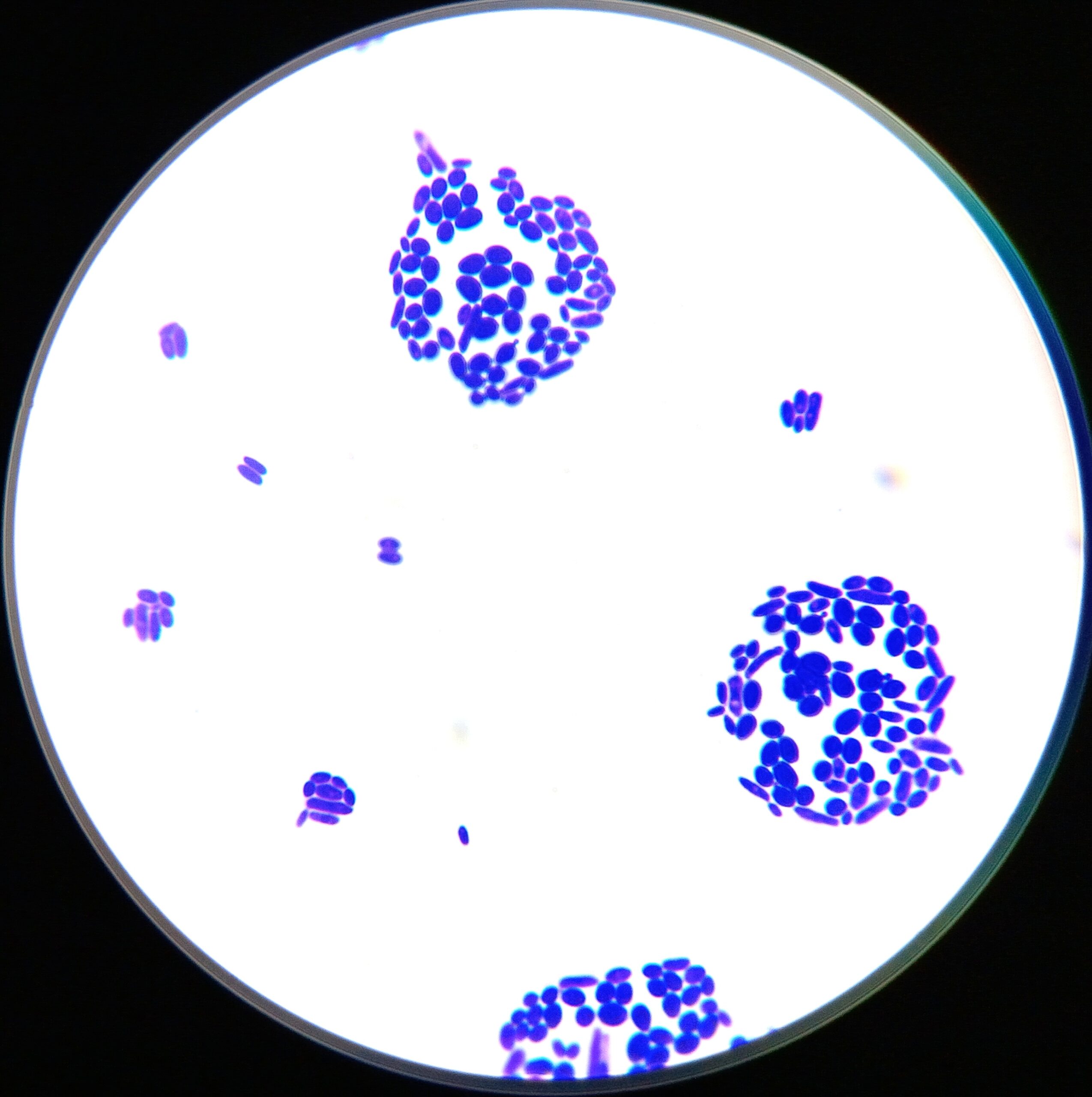
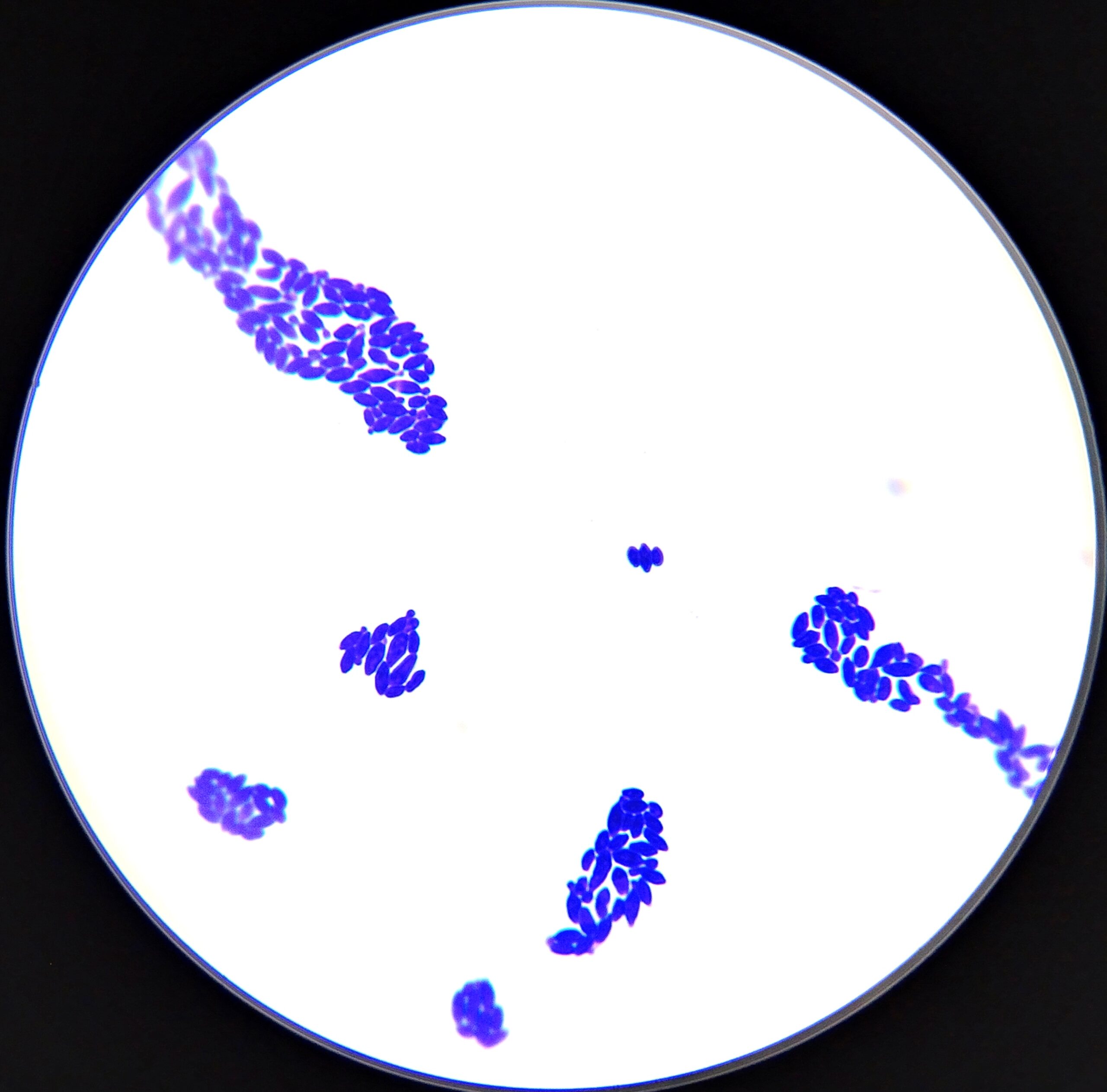
Here are five critical beer spoilage indicators every brewer should know and why proper laboratory testing is your best ally in catching mistakes before they become a Lactoballius infection that could impact your whole production.
1. Formation of a Pellicle
Just like with Pediococcus, an infected beer will likely show signs of a pellicle formation. This thin layer of biofilm is found floating on top of fermenting or aging beers, typically comprised of proteins, bacteria cells, polysaccharides (long chain sugars), and captured bubbles of CO₂. Visually inspect the pellicle to confirm that it is not mold – look for signs of wet, slimy film indicating a bacteria – as opposed to the look of soft powdery almost fuzzy texture indicating a mold.
2. Off-Flavor of Spoiled Milk
When Lactobacillus bacteria infects your brew, you’ll know from the visual elements pretty quickly. However, the visual cloudiness or pellicle is only the sign of an infection – not what type of infection. Using your sensory skills you’ll need to taste the beer and evaluate both flavor and aroma. A Lactobacillus infection will hit your nose immediately with the strong aroma of spoiled dairy, old yogurt, and the bleuest of cheeses. If you are brave enough to work past the smells that waft from an infected batch, the product will have quite the tangy, acidic zip that will help you confirm the infection.
3. Lower Alcohol Content than Expected
Since Lactobacillus metabolizes beer sugars such as maltose into lactic acid instead of the familiar process of Saccharomyces eating sugars to create alcohol, you’ll notice that an infected beer is hitting gravity targets much slower. Additionally, the alcohol content is much lower than expected. Since those sugars are being consumed by the bacteria instead of the yeast, there’s less material for the yeast to convert to ethanol. This is why it’s not only important to test for your starting and finishing gravities, but equally important to test for alcohol content instead of simply using gravity differences to calculate the ABV.
4. Decreased pH
As discussed above, the process Lactobacillus goes through in order to survive and thrive in your brew creates extra quantities of Lactic Acid. You’ll see this reflected in a much lower pH measurement than expected through the fermentation cycle. Once the brew hits its target gravity, brewers will notice that the pH will drop drastically low with ranges between 4.00 and 3.20 depending on the seriousness of the infection. This is a great example of why testing all your brews from KO to pitch, and before and after the D-rest is important. Tracking the pH of your brew through its lifecycle will help you keep a finger on the pulse of what is going on inside the beer, and can aid you in identifying where the infection first took root.
5. Stalled fermentation
A stalled ferment goes hand-in-hand with the other notable signs of a Lactobacillus infection. Because the bacteria can lower the pH, and remove short-chain sugars that yeast prefer, you’ll likely see a very slow fermentation with your blow off buckets getting very little action. Depending on the timing, and when your batch was infected/inoculated, the Lactobacillus can cause a delay in your ferment. Keep an eye on your tank pressure and blow-off buckets for unusually boring activity. If you also see the four other signs, Lacto could be your culprit.
Next Steps
Trust your eyes, palate, and nose. If your beer has a pellicle, seems uncarbonated, or if it is exhibiting off-flavors, don’t wait for it to show up in taste tests or customer complaints. Sending samples to a beer testing lab for analysis will confirm whether spoilage organisms are present and help you trace the source before the problem spreads. Brewery lab testing helps you understand what’s causing the change and whether the issue lies in your packaging line, your sanitation process, or deeper in the fermentation chain. A professional beer testing lab can identify whether you’re dealing with microbial contamination, residual fermentation, or another underlying problem before it spirals into something bigger.
Concerned you have a Lactobacillus infection? Oregon BrewLab has a few options for you that will identify and confirm your theory. Purchase the tests below for your sample, or explore the American Society of Brewing Chemists (ASBC) beer testing methods to identify bacteria in your own beer lab.
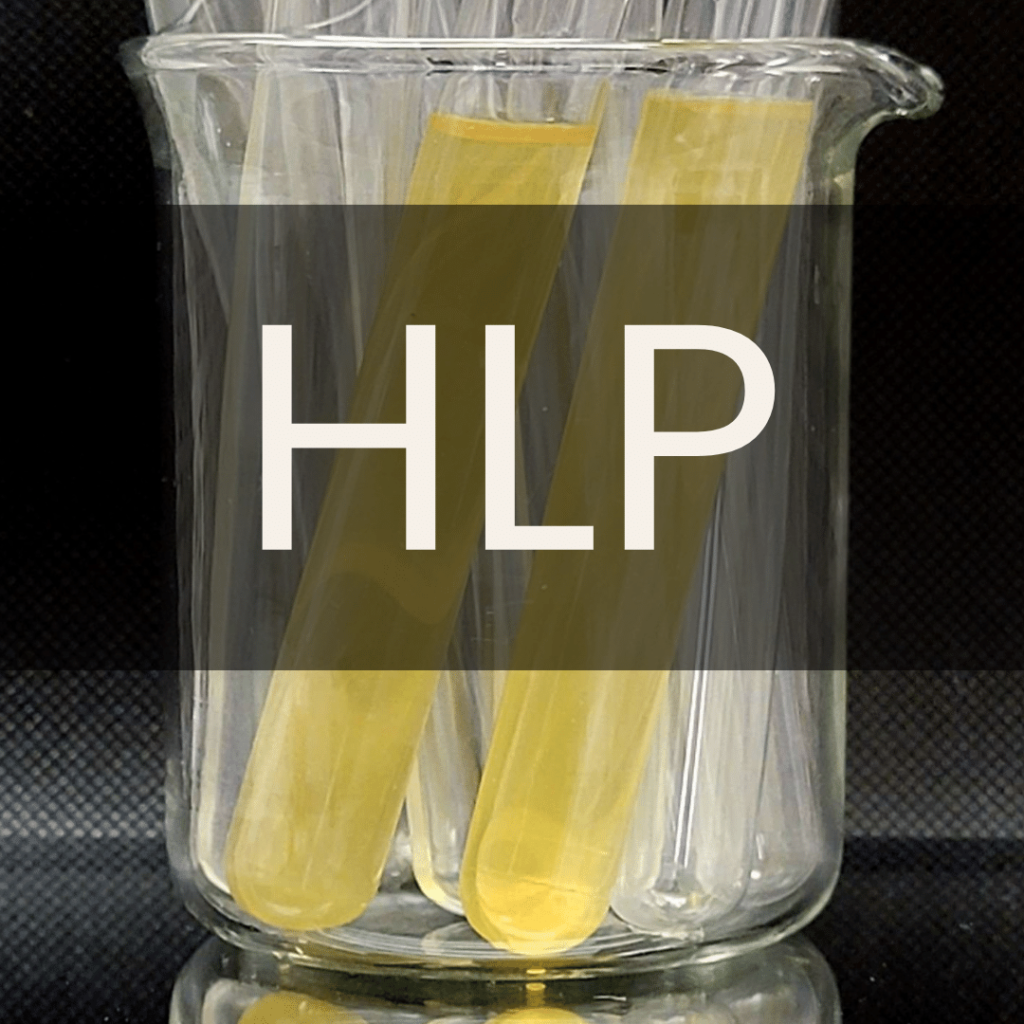
HLP Tubes
Hsu’s Lactobacillus and Pediococcus (HLP) growth media is ideal for Pediococcus identification for a number of reasons:
1. Quick turnaround time; HLP micro results in 3 days.
2. No yeast growth; HLP inhibits Saccharomyces.
3. ID Pediococcus without a microscope; HLP is a differential media, so you can see from the tube if there’s an infection.
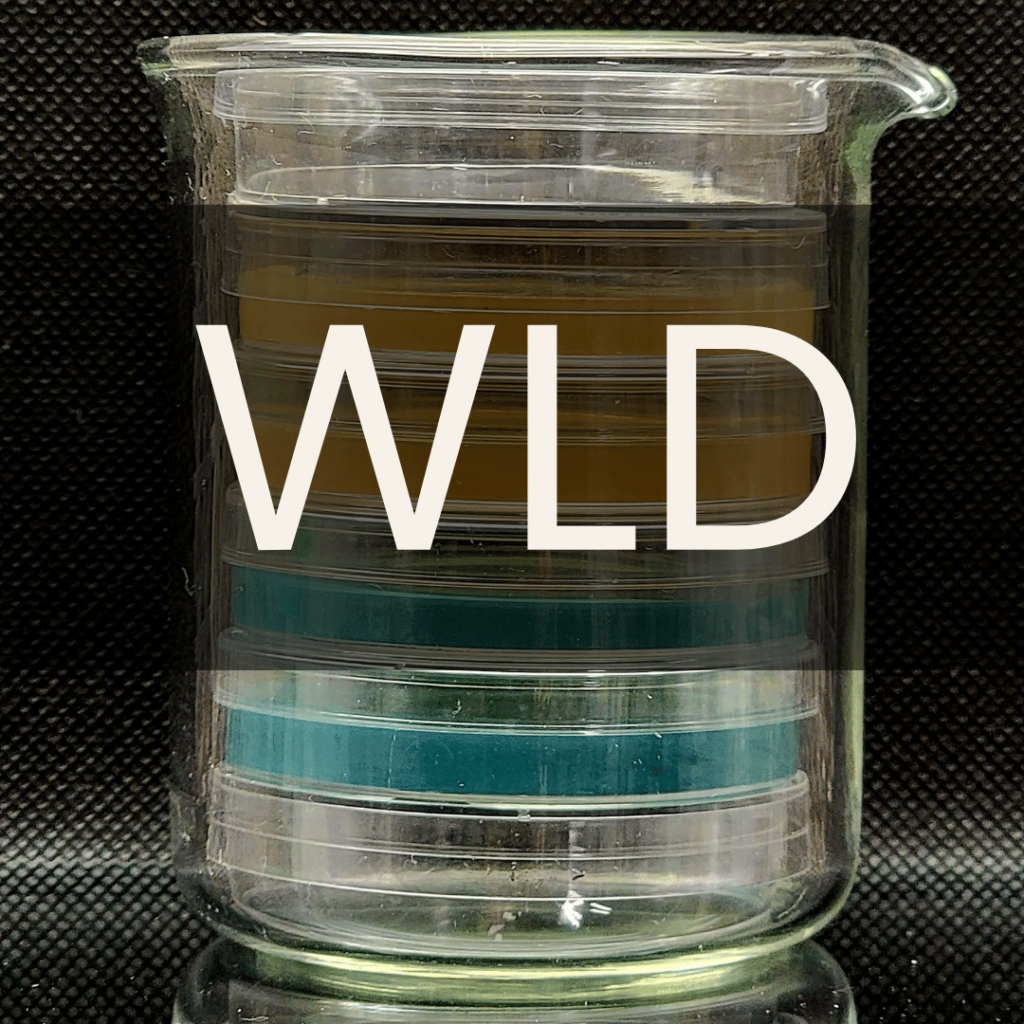
WLD Plates
Wallerstein Labs Differential Medium (WLD) growth media is great for Pediococcus identification for a number of reasons:
1. Identify L.A.B.s via pH color change; WLD is a differential media
2. No yeast growth; WLD inhibits Saccharomyces.
3. Can ID other bacteria; WLD grows different bacteria aerobically and anaerobically.
Micro Combo: HLP, WLD
Or try both! The Micro Combo provides confirmation on two different sets of media of your choice at a discount. Get the best of both worlds by combining the HLP testing alongside the WLD plates. It guarantees partial results in 3 days, and confirmation on day 5!

Thirsty for more Microbiological Materials from Oregon?
OBL can help you ID that bacteria you just Gram Stained. It seemed so simple a moment ago! Download the Free Reference Guide “Micro ID Flowchart.” Be sure you’re able to describe the properties of your growth colony. Did it incubate with or without oxygen? Is the bacteria an Acid Producing colony? Is the shape of the cells long and thing (rods) or spherical (cocci)? After Gram Staining are the cells purple (positive) or pink(negative)? Does the colony release a gas when exposed to hydrogen peroxide (catalyse positive)?
Answer these questions and let the flow chart do the rest!