
Hopped-Up Cocktails
With Fresh Hop Harvest upon us, I decided to make some Hop Bitters. I want to have that hoppy flavor follow me into winter and live vicariously through cocktails as a faux-fresh hopped drink. Adding hop bitters to a number of cocktails proved successful. Read on to learn about the science of hops, how to make hop bitters from 2 different methods, followed by a few cocktail recipes (that were the best part of the experiment). And if you’re interested, you can get your hop bitters tested for IBUs at Oregon BrewLab!
Brief Hop Science
Hops are a super complex beer starting material. While there are incredibly more complex guides to the chemistry of hops and hop acids, so this is meant to give you a quick read on the basics.
Hop Taste / Flavor
Science
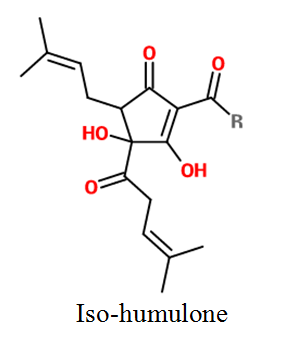
(6S)-3,5,6-Trihydroxy-2-(3-methylbutanoyl)-4,6-bis(3-methylbut-2-en-1-yl)cyclohexa-2,4-dien-1-one, also known as α-lupulic acid is classified as an αlpha acid which stimulates the trigeminal nerve when imbibed through beer. This is done through the isomerization of α-lupulic acid into three different isomers via temperature increase.
Translation
Hops contain a compound called humulone which provokes your tongue in identifying flavors and bitterness. This is done through chemically changing the structure of this compound into iso-humulone by boiling the hops.
Hop Smell / Aroma
Science
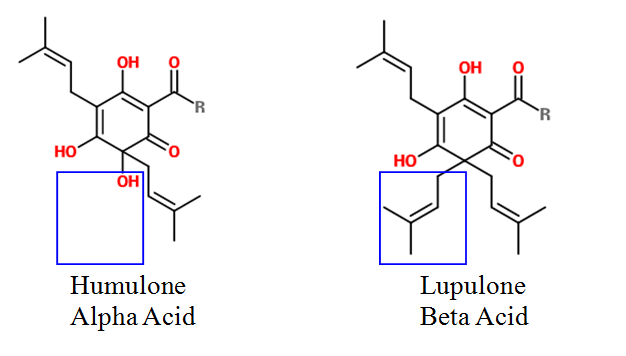
3,5-dihydroxy-2-(3-methylbutanoyl)-4,6,6-tris(3-methylbut-2-enyl)cyclohexa-2,4-dien-1-one, also known as β-lupulic acid is classified as a beta acid which stimulates the olfactory system when inhaled. This is done through extraction of the acids in an ethanol mixture.
Translation
Hops contain a compound called lupulone which provokes your nose in identifying aroma. This is done through a process called dry-hopping in which hops are added to a brew before it’s finished conditioning.
Making Hop Bitters
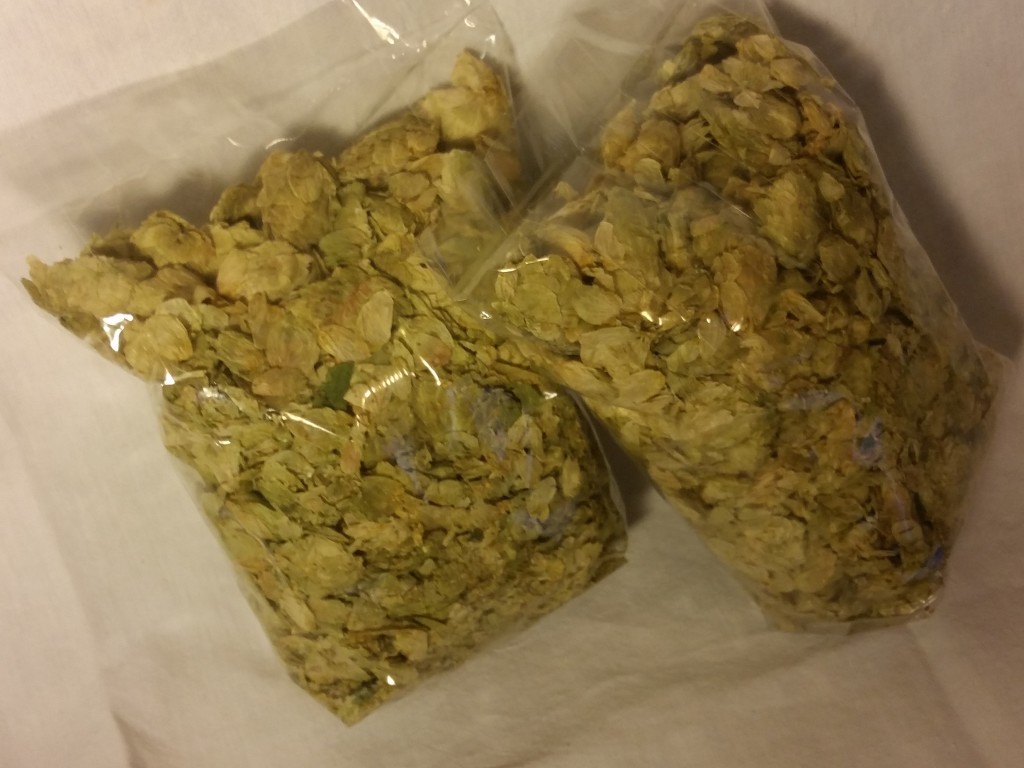
I used 14.4% alpha acid Citra hops from a local homebrew shop (LHBS). The goal was to have a hop that provided a lot of fruity and floral aromas, specifically “strong citrus and tropical tones of grapefruit, melon, and lime” according to Hopunion.
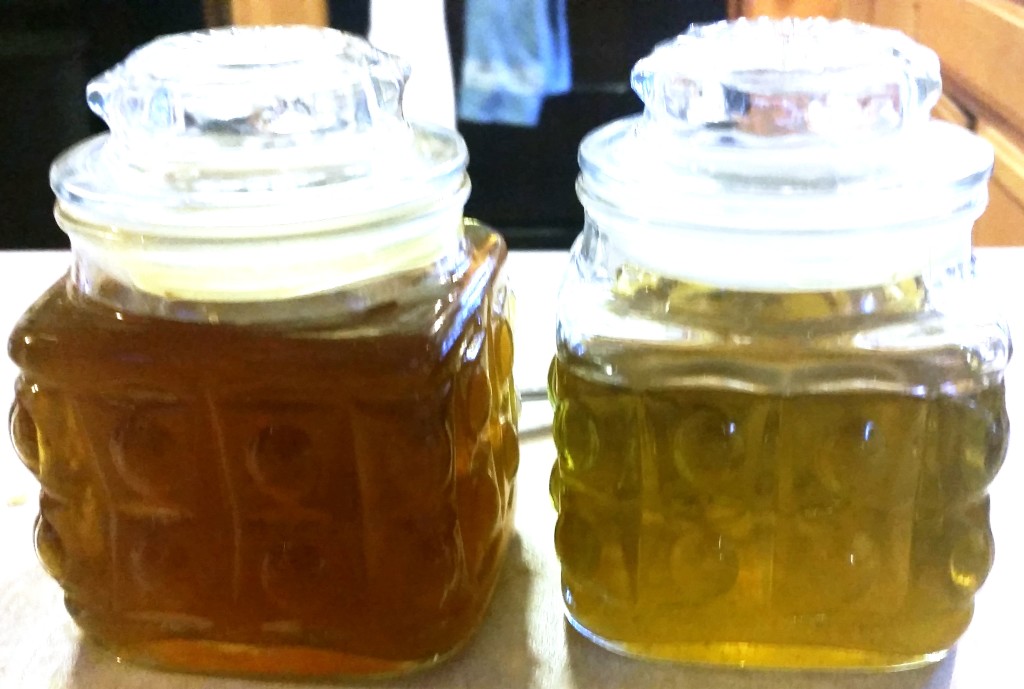
Because the interwebs were unclear about the direct technique, I created 2 different methods, detailed below. The first process is super easy – throw an ounce of hop flowers in a jar and fill to the hop level with a high proof alcohol. But I wasn’t satisfied with just that – we know that in the brewing wolrd in order to unlock those hop bitters – you need to boil them. So for the second method, I boiled the ethanol before adding it to the hops. It was pretty clear right from the start that the second method created hop bitters that were stronger, more aromatic, and much more apparent in the mixed drinks we made. If you decide to give this a try – my recommendation is to use the Hot Extract method for the best hopped cocktails results.
Supplies
- 2 oz of fresh [your favorite] hops from your garden, a friend, or your neighborhood friendly LHBS
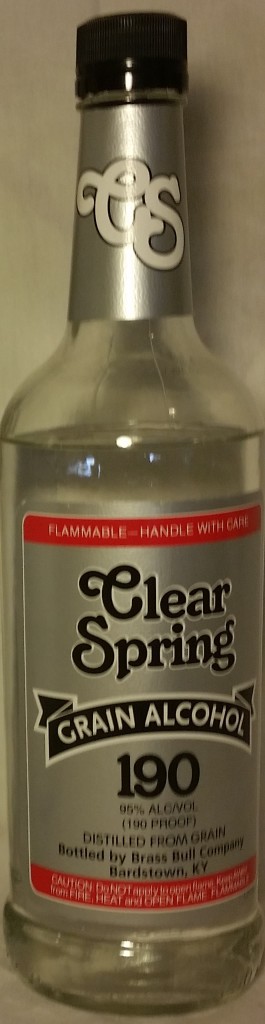
- 1 liter 190 proof Ethanol (as classy or as bottom shelf vodka as you prefer)
- 2 quart Mason jars
- Mesh strainer
- Cheesecloth (optional)
Method One: Cold Hop Tincture
- Weigh out 1 oz of hops into the Mason Jar
- Add in 1 half liter (500mL) of Ethanol
- Wait 12 hours
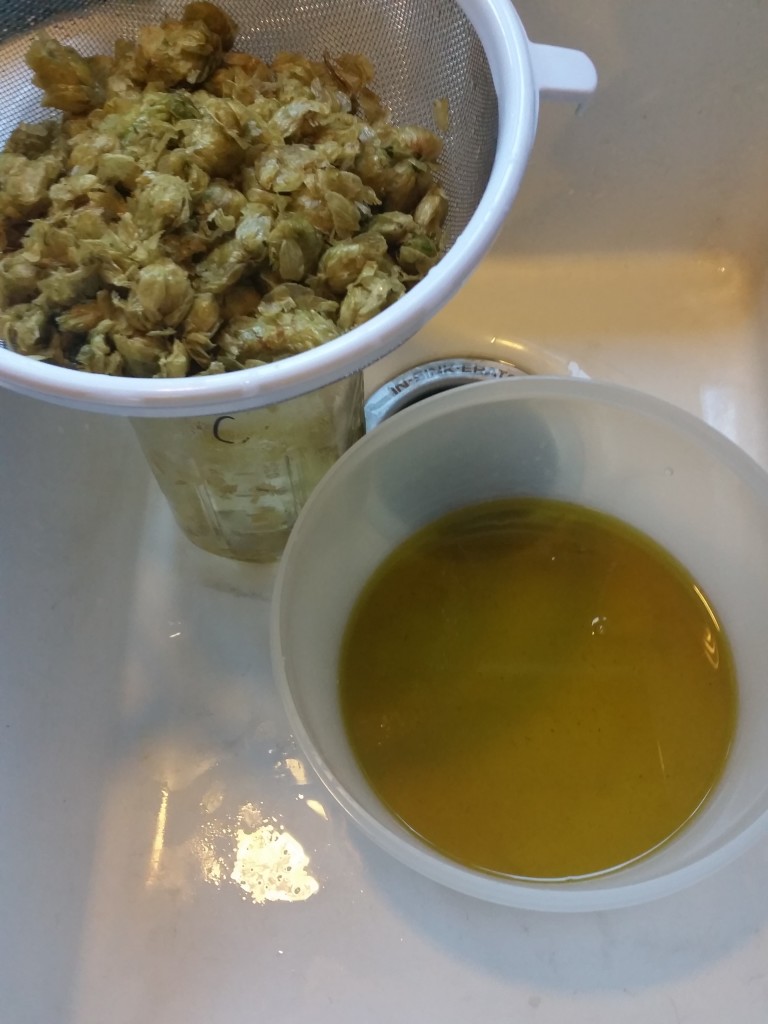
- Using cheesecloth-lined strainer, empty the contents into a large bowl.
- Squeeze extra liquid out of the hops using the cheesecloth.
Method Two: Hot Hop Extract
- Weigh out 1 oz of hops into the Mason Jar
- Add in a little more than 1 half liter (~550mL) of Ethanol to a pot.
- Bring to a boil.
- Add boiling ethanol directly to the Mason Jar.
- Wait 12 hours
- Using cheesecloth-lined strainer, empty the contents into a large bowl.
- Squeeze extra liquid out of the hops using the cheesecloth.
Making Hop Bitters Cocktails
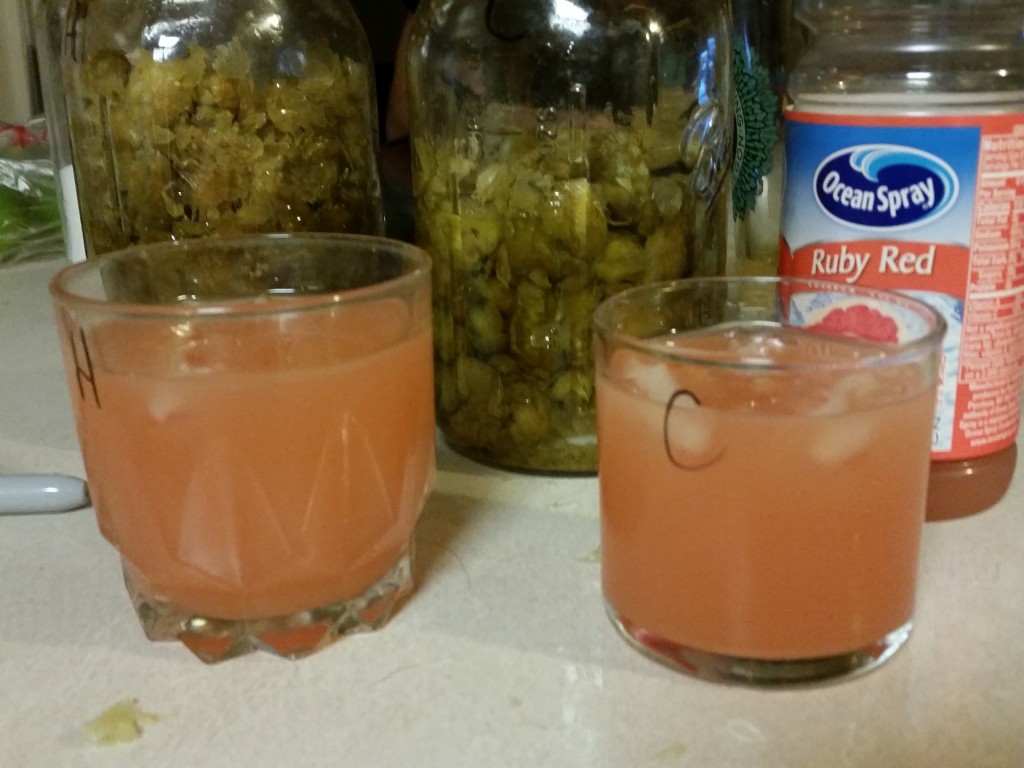
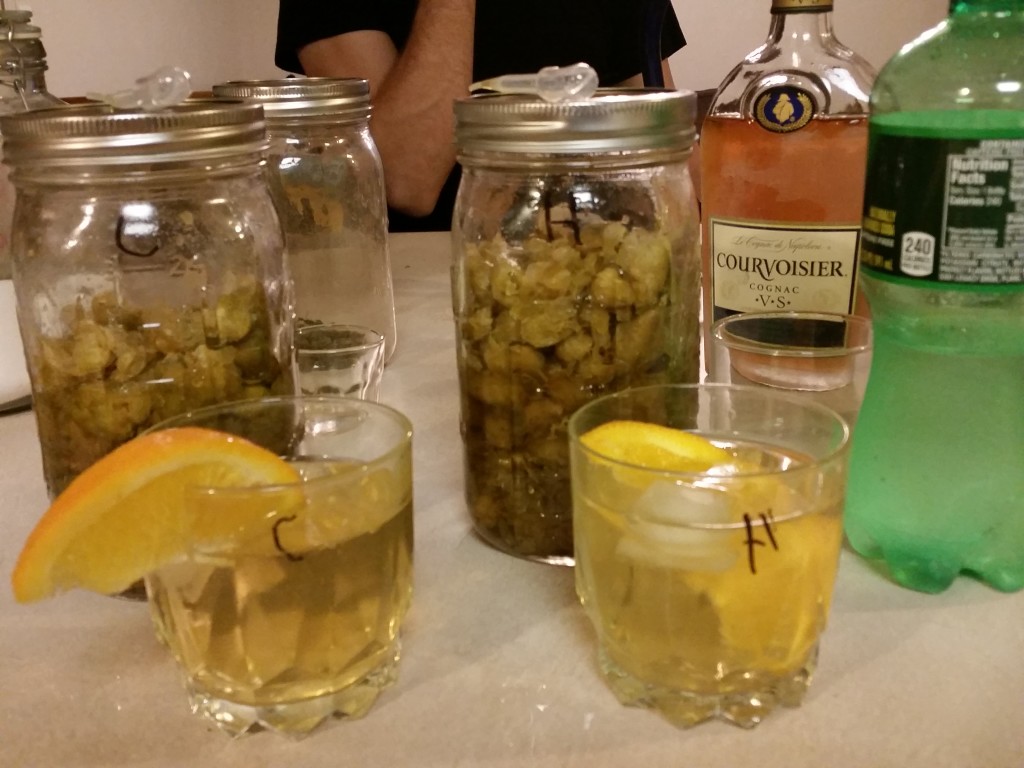
We tested out each of these hopped cocktails with both types of hop bitters. There wasn’t a beverage we didn’t enjoy. But definitely use the Hot steeped hops over the Cold steeped hops. I tried to offer a few different alcohol types – hopefully there’s something here for everyone.
Gingerly Hoppy Whiskey
- 1oz Wiskey
- 4oz ginger ale
- ~1/4tsp grated ginger
- 40 drops (2mL) hop bitters
- Lemon slice garnish
Firstly, this cocktail was so easy to drink! The bitters offset the sweetness of the ginger ale, and brought out the spiciness of the whiskey to make this beverage taste hot on many different levels.
Hoppy Old Fashion
- 1oz Brandy
- 4oz 7-up
- 1/4tsp sugar
- 20 drops (1mL) hop bitters
- Orange slice garnish
The hop extract was the most mellow in this cocktail – providing a floral element to a well balanced drink. Hops were a decent substitution for bitters.
Grapefruit Hopped Gin
- 1oz Gin
- 4oz grapefruit juice
- 20 drops (1mL) hop bitters
- Grapefruit peel twist for garnish
Generally, I don’t actually like gin drinks – but I loved this one! The grapefruit paired so well with the bitters – bringing out that citrus side along with the floral notes. Markedly, the pine flavor of the gin was complimented really well with the overall earthy and citrus-y tones of this awesome drink.
Lemon, Lime, and Hop Bitters
- 1oz Vodka
- 4oz 7-up
- 1/2 of lime pulp and juice
- 20 drops (1mL) hop bitters
The hops were best displaced in this very basic drink. There were no competitive flavors, just citrus, citrus, and more citrus. Equally important, the hop bitters were able to show off their grapefruit and lime side, while still producing a floral aroma.
Let me know what you’ve had Hop Bitters in – and which hops were used! I’m curious to add recipes to my Hop Bitters Cocktail collection, what hopped cocktails do you recommend?
Cheers!
Do you recall which gin was used in the grapefruit cocktail? I tend towards the botanical/herbal, but would start with another if you suggest.
Thanks!
I think if we were more snobbish with our hard liquor I might’ve posted the list we used. The gin was most likely Bombay Sapphire. I would shy away from cucumber like gins and stay on the woody/herbal side. Let me know what you end up trying. Cheers!
Thanks for the recipe! I followed it last year and have had great fun playing around with these bitters. My favorite uses have been in grapefruit gin, and lifting up otherwise dull beers!
The grapefruit gin is my favorite as well!